Tuesday, February 22, 2011

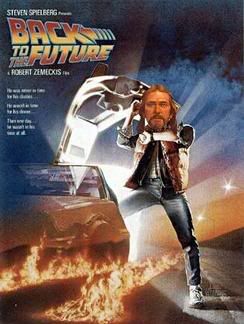
Back to (Christ in) the Future

I am writing to you, little children,because your sins are forgiven on account of his name. I am writing to you, fathers, because you know him who is from the beginning. I am writing to you, young people, because you have conquered the evil one. I write to you, children, because you know the Father. I write to you, fathers, because you know him who is from the beginning. I write to you, young people, because you are strong and the word of God abides in you, and you have overcome the evil one.

- First John 2:12-14 (NRSV)

In what ways can we reach out to those who need Christ? Most of us can probably point towards a number places, situations, and relationships where the Spirit of the Living God would make all the difference in the world. I know that I am constantly aware of people who cry out to God for help and salvation. But what does this mean to share Jesus in today’s wild, crazy, ever-changing context for ministry? One of today's cutting-edge United Methodist thinkers, Rev. Dan Dick, has a great deal to say about this topic and I want to share with you this month his take on what the future holds . . .

I will say it again: our future does not lie in our past. Trying to “become” what we once were is like trying to put the toothpaste back in the tube (a lot more trouble than it is worth). Why can’t we be the church we were in the 50s or 70s? Well, a lot of reasons. We are no longer a big duck in a small pond — there are hundreds of alternative “churches” we weren’t in competition with back then. We have a much greater social conscience than we did in the 50s — look at our Social Principles. We are no longer defined by missional service and evangelism — we’ve gotten complacent in our old age. We were assimilated into the “Church Growth” collective mindset of the late 20th century and have never recovered. Our culture and Western world has evolved and isn’t looking for the same things from us. We stopped having as many kids, so our Sunday schools dwindled (still the best way to have a booming Sunday school — grow your own! Just add water…). Competition for time, energy, and entertainment value has shifted. Sunday school or soccer? Tae Kwon Do or choir? American Idol or Church Council?

New days call for new wineskins. I look at the churches that are thriving. They aren’t wasting time trying to talk people into wanting to come to church — they are doing life-transforming ministry and faith-transforming service and people who want to make a difference are turning out. United Methodism needs to get the “mega-church” gleam out of its eyes and focus in on the most fertile niche market available — small, intimate, active and engaged cadres of highly motivated people. Big church markets are saturated. Where there is real life and energy is in small clusters of Christians not much concerned with numbers or the institution who are living their discipleship in spite of “the church” rather than because of it.

I was talking to a young couple who have a group of Christian friends. Nine people. Nine people who pray together and meet a couple of times a week. Nine middle-class people… who ponied up a total of $45,000 to go to Haiti to volunteer two weeks of their lives to serve those in need. I sit with church groups every week who gripe and moan about their financial plight who have no interest in doing anything for anyone else, but they want to keep their own building open with the lights and heat on. Such a church will have no appeal to a young group of Christians seeking to heal others in the name of Jesus the Christ.

We have effectively coated the gospel with layer after layer of church goop until it is all but unrecognizable. We talk endlessly about the ministry we aren’t doing, instead of marshalling our forces to do something worthwhile with what we have. We spend millions of apportioned funds on market research and advertising while the world goes to hell in the proverbial handbasket. Shame on us. We can do so much better. Perhaps the time has come to… I don’t know… “rethink” something. (United Methodeviations - Posted 11/13/2010)

What do you think of Dan’s words? Prophetic or irrelevant? I personally think that he has a really exceptional point, but what does that mean for us? And what should we be “rethinking?” May God grant us the grace and wisdom to know and understand . . .

The God of peace be with you all!

Pastor Tom

Tom Pasmore is the pastor of Richardson Park UMC just outside of Wilmington, DE and would love to write more cool stuff, like Dan R. Dick, but he just can't seem to find the time . . . You can reach him at pastor@rpumchurch.org.

Saturday, February 12, 2011

Notes for the message based on Matthew 5:21-37; “A” -E6

This week’s readings are: Deut 30:15-20; Psalm 119: 1-8 or UMH 840; 1 Corinthians 3:1-9; Matthew 5:21-37
You can read these Scriptures here:  NIV  // ESV // NRSV // The Message

clip_image002

Human beings are notoriously resistant to change. Christians are especially resistant to change because we believe that God is with us and therefore we expect God to take care of us. We expect God to be there at a moment's notice, bailing us out of all kinds of mayhem.

clip_image004

That is why the image of Jesus as a gentle shepherd is so popular in our culture. We, as Jesus' sheep, graze peacefully on a gentle slope of the hill (preferably with a large screen TV somewhere nearby) while Jesus watches over our safety and security day and night and prepares a picnic lunch to delight our senses by a gently flowing stream.

clip_image006

The truth is that Jesus did not come to protect the world; Jesus came to redeem the world. Jesus came to empower us to live in the world, to serve the world, to tend and take care of the world and to transform the world. Jesus came to empower his church to infuse the world with joy and zest for life: "you are the salt of the earth and the light of the world" (Matt 5:13,16) and "I've come so that you have life and live it abundantly" (John 10:10).

clip_image008

We are created in the image of God; that means that all of us have reasoning abilities and we are able to construct norms and follow rules by which our society operates. In today's Gospel reading Jesus deals with several portions of the law. Before we begin I want to make it clear; RULES AND LAWS ARE GOOD!  Rules are the foundation of a civilized society. We can get into our cars and drive to Florida or to California and be fairly certain that other drivers will follow rules and that we will get to our destination. We know that if everybody follows the agreed upon rules of conduct, we will enjoy fulfilling and productive lives to the glory of God.


On the other hand we are God's creations, and being created in the image of God means that we have an ability to love and to experience emotions and feelings.


These abilities: {1} to reason and {2} to love and feel, are two complementing aspects of our lives. We need both.


If we live relying only on rules, we open ourselves to lives of self-justifying righteousness. No murder today; check!  Did not cheat on my wife today; check!  Did not steal anything today; another check! My mom and dad are dead and buried, therefore I do not need to do anything to honor them; another check! WOW! I am a righteous dude!


That is a checklist spirituality; it invites us to follow the letter of the law without giving any consideration to the spirit of the law. Jesus that I know wants more for us.

clip_image010

"You've heard... But I tell you..." With these words Jesus is calling us to look beyond the rules and legalism of religion. With these words Jesus is challenging us to consider our Christian identity to be MORE than just a membership in a group of likeminded people. Jesus is calling us to be changed and transformed by loving each other, and taking care of each other and the world in which we live.

clip_image012

So today I want to leave you with couple of thoughts:

  • What kind of community do you want to live in? What kind of community do you want to build? What can we do to build and to create such a community?

  • In what ways do you minimize your involvement and hide behind the rules? Think of all the times when you said, "we've never done it that way" or "nobody would want that."

These are tough questions and I know such questions are difficult to think about. But if we take the time to think, and then gather together to respectfully and lovingly discuss our opinions and ideas we will be inviting the kingdom of God into our homes, into our community. Our actions (the way we live our lives) will follow and will impact the world that we live in.

clip_image013

"You've heard... But I tell you..." Jesus makes the point that religion is a foundation of a good thing. Religion reminds us who we are and whose we are. Jesus challenges us to live "abundant lives" by living the promise of our faith in God, not because it will change others, but because our faith in God can bring positive changes, healing and emotional maturity in ourselves and help us to build a better tomorrow for each other.


To God Be The Glory!


2011_YouthRallyCurrently Pastor Asher Tunik is pastoring Mt. Pleasant United Methodist and Tome Memorial United Methodist churches located respectively in Colora and Port Deposit, MD.
Pastor Asher blogs at Zis-N-Zat; his blog is at this link.

Saturday, February 5, 2011

Notes for the message based on Matthew 5:13-20; “A”–Epiphany 5

This week’s readings: Isaiah 58:1-9a ; Psalm 112:1-10 or UMH 833; 1 Cor 2:1-12; Matthew 5:13-20

You can read these scriptures here:   NIV  //  ESV  // NRSV  // The Message


clip_image002[1]

When we think about the Sermon on the Mount, in our imagination we see Jesus standing in front of the crowd of people and preaching for a long-long-long time. In reality I think that the Scriptures that we call The Sermon on the Mount represent a period of days and maybe even weeks, during which time Jesus preached many messages rather than one long sermon. Over time, prior to Jesus' words being written down, these messages were passed from generation to generation using oral tradition. In that process, as these messages were told and retold over many generations they were compressed and the resulting portion of the Gospel of Matthew -- what we know today to be chapters 5, 6 and 7 -- became collectively known as The Sermon on the Mount.

clip_image004[1]

We know what Jesus preached about during that revival; all we have to do is read those three chapters in Matthew. The question is, why did Jesus preached what he preached, why did he chose these topics? Matthew gives us a hint in the verses directly preceding the Sermon on the Mount (Chapter 4:23-25):

NIV Matthew 4:23 Jesus went throughout Galilee, teaching in their synagogues, preaching the good news of the kingdom, and healing every disease and sickness among the people. 24 News about him spread all over Syria, and people brought to him all who were ill with various diseases, those suffering severe pain, the demon-possessed, those having seizures, and the paralyzed, and he healed them. 25 Large crowds from Galilee, the Decapolis, Jerusalem, Judea and the region across the Jordan followed him.

Before preaching at the revival, Jesus "went throughout Galilee," and healed "every disease and sickness." Matthew tells us that "large crowds" from nearby areas followed him. Jesus spent time with the people who followed him; he took the time to listen to their stories; he heard what was bothering them, what they thought was missing in their lives, and what they thought would help them to live better lives.


Jesus was preaching to men and women who were struggling with the reality of brutal oppression by Roman garrisons. Their land, their cities, even their religion was controlled by the Romans. To give you an example, the Jews of first century Palestine did not eat pork, yet from elsewhere in the Bible we know that there were herds of pigs in Israel ((Matthew 8:28-33; Mark 5:6-13; Luke 8:27-34)); presumably they were used to feed the Roman conquerors. From secular resources we know that there were heated arguments and debates about what the children of Israel could do to live productive lives that would honor their faith in God, their traditions and their history.

clip_image006[1]

The men and women whom Jesus addressed during that revival were struggling with questions as to how they could preserve their cultural and religious identity as a people called and set apart by God. That is why in that revival, Jesus spoke about such topics as how to forgive, how to create a healthy and productive environment in the home, how to be persistent in the face of adversity, how to make judgment calls without being judgmental, how to deal with anxiety, how to be a better person in trying circumstances. During that revival, Jesus taught his congregation how to be a follower of God, how to pray, how to live out their faith and devotion in the time and place where they lived. During that revival Jesus taught his congregation how to act justly, how to extend mercy and how to walk humbly with the God of Israel, enabling them to live better lives during their time in history and in their geographical place. During that revival, Jesus gave his congregation practical ways to learn more about their God, to grow in their love and devotion to their God, and to be in tune with God's guidance on their lives. Today we would say that during the revival that we commonly call the The Sermon On The Mount, Jesus gave his followers practical guidance on how to be better men and women, how to translate their relationship and devotion to God into practice, and although the word "Christian" was not invented yet, he taught them how to be better "Christians."

clip_image008[1]

Although we live two thousand years after Jesus, we face our share of problems. Every generation does. Just like the men and women in first century Palestine, we struggle with what it means to be faithful followers of God, and what we can do to respond to the challenges that we face in our lives.

clip_image010[1]

Although we may not hear the boots of occupying garrisons on our streets, we struggle with the issue of control. Many families across our land live in anxiety because of an  "occupying force" in their lives called "credit." We may not think of it as "brutal oppression" but what would you call it when parents have to work two or three jobs to pay interest on their maxed-out credit cards and/or to pay the mortgage on their house while their children are left to fend for themselves and to raise each other? Debt is a form of slavery and oppression for our generation.

clip_image012[1]

In first century Palestine, there were heated arguments and debates about what the children of Israel could do to live dignified lives that honored their faith in God, their traditions and their history. If you wonder what those debates sound like today, just turn on CNN or FOX-NEWS during election time. We hear heated debates about the ways we could honor the "American Way of Life," or whether we should print "In God We Trust" on our money. We hear very different opinions as to what our country needs. Usually after the elections there is a stalemate in Congress and the House, “Red People” and “Blue People” blame each other for everything that is wrong in the universe. Meanwhile our health system is the most expensive in the world, a large number of children in this country graduate from high schools without learning how to read or write and without basic math skills, our national debt is rising, unemployment is ten percent, our young men and women serving in the armed forces risk their very lives in wars fought in faraway lands and you don't want to get me started on energy costs and dependency on foreign oil.

clip_image014[1]

I don’t say all of this to depress you. The point I am making is that there is hope. There was hope for men and women who took the time to listen to Jesus 2000 years ago, and there is hope for men and women who take the time to listen to Jesus today.


The Sermon On The Mount is just as relevant to us today as it was to the men and women in first century Galilee. During that revival 2000 years ago, Jesus taught his followers the skills they needed to meet the challenges of their day, and He challenged them to transform their lives through their relationship with God. God does the same with us today by examples from Jesus' life and ministry and through the guidance of the Holy Spirit.


So what's in it for us? What can we take from today's Scriptures and how can we apply it to our lives?

clip_image016

If you look at the Sermon On The Mount in your Bibles, you will discover that today's reading is located between the Beatitudes that we explored last week, and teachings that look in depth at various pieces of the Law. Even a cursory look will reveal the rough equivalence of Jesus' individual messages to the Ten Commandments. In today's Gospel reading we heard Jesus tell to his congregation:

NIV Matthew 5:13 "You are the salt of the earth. But if the salt loses its saltiness, how can it be made salty again? It is no longer good for anything, except to be thrown out and trampled by men.

14 "You are the light of the world. A city on a hill cannot be hidden. 15 Neither do people light a lamp and put it under a bowl. Instead they put it on its stand, and it gives light to everyone in the house.

16 In the same way, let your light shine before men, that they may see your good deeds and praise your Father in heaven.

The truth is that we need to reclaim our "saltiness" and to re-light our light just as much as the men and women who lived in ancient Galilee. We need to rediscover what it means to grow in our love and devotion to God and how we can be in tune with God's guidance on our lives. We need to learn those same practical lessons that Jesus taught in the Sermon on the Mount. Men and women who listened to Jesus 2000 years ago changed the world, because they were with God. When we listen to God and work with each other and with God, all things are possible for us as well.


In the next few weeks we will explore the Sermon on the Mount in greater detail, and we will discover that Jesus was giving his hearers then, and as well as us today, practical advice on how to rediscover our "saltiness," how to re-light our light, how to meet the challenges of our day, and He challenges us to transform our lives through our relationship with God.


{Transition to the Holy Communion}


Currently Pastor Asher Tunik is pastoring Mt. Pleasant United Methodist and Tome Memorial United Methodist churches located respectively in Colora and Port Deposit, MD.


Pastor Asher blogs at Zis-N-Zat; his blog is at this link.

Tuesday, February 1, 2011

Free Electronic Bible available for Download

To my Theo-Gumbahs!


I found Bible software that can run off of your USB drive (this is not a typo, you can install the software on your USB drive and run it from there). That means that you can have your Bible software with you anywhere, even if you do not have your own computer and have to use a public computer (as in a library or in a car dealership, while your car is being worked on).


Name of the software is The Word; here is the link: http://www.theword.net/


NIV and The Message (along with few other translations) are available for a fee ($25.95, $16.95 respectively). There are many “freebee” translations (AKJV, ESV, HCSB, WEB to name a few). So far I only tested this software with “freebee” translations and did not have any trouble.


Enjoy the snow!